
Deaf Smith County Arrest-Warrant Fields
Texas Code of Criminal Procedure Chapter 15 spells out what an arrest warrant must contain. Article 15.02 requires the accused's name when it is known, or a reasonably definite description. The offense charged must appear. So must the magistrate's signature and title. A complaint or sworn affidavit usually supports issuance. This is a legal outline, though, not a promise that every item shows up on some public web page in Deaf Smith County. The Texas Judicial Branch explanation lays out the separate roles of district, county, justice, and municipal courts across the state.

Deaf Smith County courts operate within the statewide Texas trial-court structure, each level holding its own jurisdiction.
Arrest Warrants in Deaf Smith County
An arrest warrant is a magistrate's written order telling a peace officer to arrest someone. A summons is different. It simply directs a person to appear. A bench warrant usually follows a missed court obligation. In Deaf Smith County, the 222nd District Court serves as the felony trial court, though magistrates in lower courts can also issue process within their legal authority. The court that signed the order keeps the case record. The Sheriff or another peace officer handles execution and custody questions. No local public site offers a complete arrest-warrant status search, so the issuing court remains the reliable answer on whether a warrant exists.
District and County Files Use Different Clerks
A felony case lives in one lane, and a misdemeanor case in another. The 222nd District Court holds felony files, and its District Clerk keeps those papers. County Court matters go through a separate clerk. Justice of the Peace traffic cases and Class C charges follow their own record path. Hereford Municipal Court keeps the city cases. A Sheriff service record can show what the agency did, but it cannot replace the filed court order itself. So an ordinary question about an arrest warrant starts with the trial court that issued it. Appeals run elsewhere: the Seventh Court of Appeals hears them for Deaf Smith County. Its official Seventh Court of Appeals page lays out that jurisdiction.

Use the Seventh Court of Appeals page for appellate information only, not to check a pending Deaf Smith County warrant.
What a Deaf Smith County Arrest Warrant Contains
The warrant itself may hold more detail than any public list. The JP spreadsheet covers only a narrow set of cases. It is no arrest-warrant sample. Ask the issuing clerk in Deaf Smith County whether the warrant, its supporting affidavit, or the execution return can be viewed under the rules that govern the case.
| Person | Name if known, or a reasonably definite description. |
|---|---|
| Offense | The charge or alleged offense identified by the issuing process. |
| Magistrate | Signature and title required by the statute. |
| Supporting file | Complaint or affidavit reference where public and part of the record. |
| Execution | Return or service information may be held in a separate court or agency record. |
Juvenile, sealed, and active-investigation material can have additional limits.
Who Serves Deaf Smith County Arrest Warrants
The Sheriff is the main countywide contact for service and custody questions. No local public page says the Sheriff serves every Deaf Smith County warrant, however. Hereford Police may be involved. So may the Precinct 1 Constable. Another authorized officer can also take the assignment, depending on the court. Call the issuing court first. Confirm the order's status there, then bring service or custody questions to the agency. The Sheriff's published contact page gives general details only, with no warrant-unit extension, no walk-in surrender schedule, and no online service-status search.
Deaf Smith County Sheriff’s Office
235 E. 3rd St., Room 102, Hereford, TX 79045
(806) 364-2311
How Deaf Smith County Arrest Warrants Are Served
A complaint or other authorized sworn basis starts the process. It goes to a magistrate. If the legal standard is met, the magistrate signs an order directed to a peace officer. The officer executes it and makes a return. The person then moves through booking, magistration, bond, and the next setting. The court and the agency can each hold different records for those steps. Article 15.26 governs public information after a Deaf Smith County arrest warrant is executed, subject to other law. A blank public page proves nothing about whether process was ever filed or served. The official Chapter 15 text covers issuance and execution, so ask the issuing court and the serving agency separate questions.
Deaf Smith County Arrest Warrant Access Limits
Executed arrest warrants and affidavits have an access starting point in Texas law. Confidentiality statutes still matter. A juvenile warrant or complaint gets special protection under Family Code §58.010. Chapter 552 can let law enforcement withhold records. That applies when release would interfere with an investigation or a prosecution. A Deaf Smith County court file also follows judicial-record rules rather than the routine process for a Sheriff request. The Texas courts' access policy explains the court-record boundary.
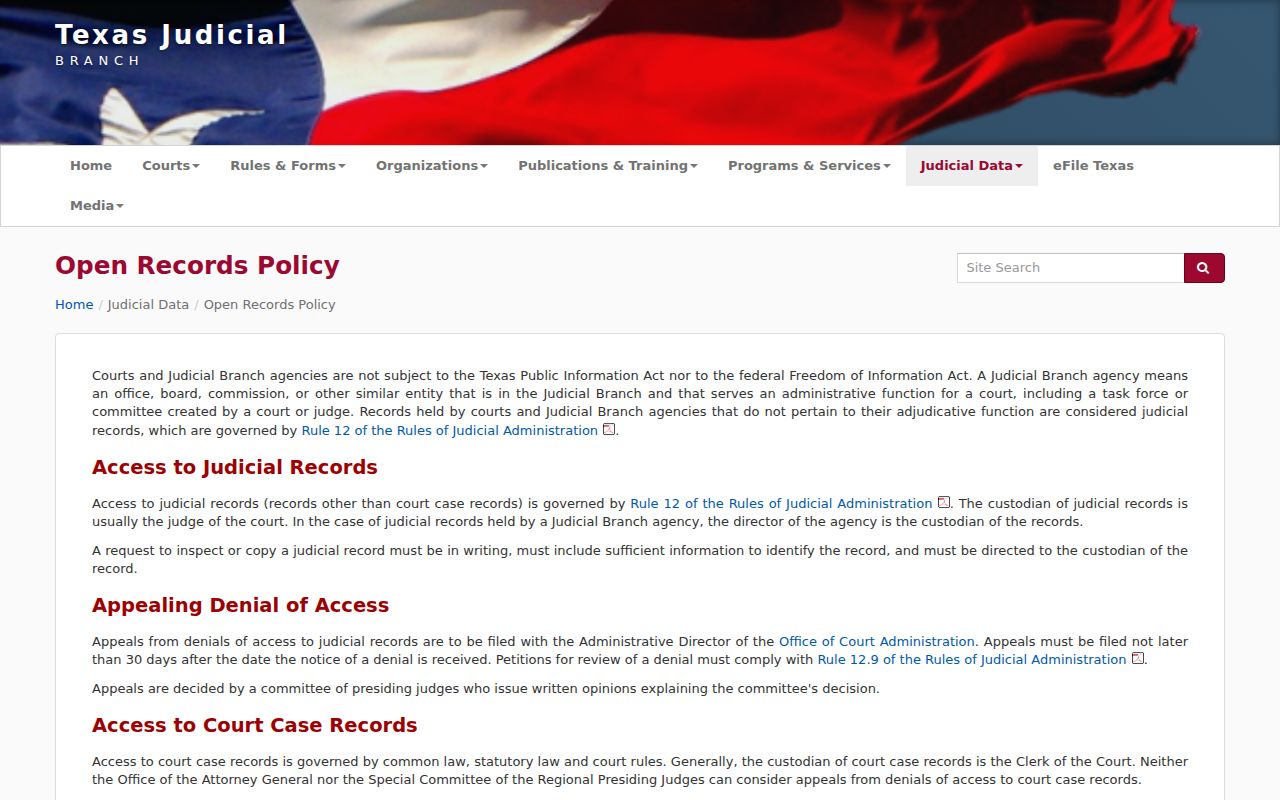
The Texas Judicial Branch open-records policy explains Rule 12 and court-record access for Deaf Smith County. It confirms no individual case status.
Arrest Warrant vs Summons vs Bench Warrant
Each tool does a different job. An arrest warrant orders an officer to take a person into custody. A summons just orders an appearance. A bench warrant usually follows a missed setting or other court failure. Confirm the label in the Deaf Smith County record itself rather than guessing from a notice or a phone message.
| Process | Usual purpose | Where to verify |
|---|---|---|
| Arrest warrant | Custody based on a magistrate’s order | Issuing court and agency for service |
| Summons | Directs a person to appear | Court named on the notice |
| Bench warrant | Addresses a missed court duty | Court that set the duty or hearing |
Check the Issuing Court Before Appearing
Think a Deaf Smith County arrest warrant might name you? Start with the issuing court, because only that court decides what happens next. Call the clerk, give the case details, and ask which options the judge allows. A Texas attorney can go further: reviewing the case, raising a motion, arranging a voluntary appearance, or weighing whether posting bond makes sense. The clerk stays on the procedural side, explaining filings and office steps. Clerks cannot tell you which strategy to pick. And do not expect the Sheriff to recall a court order. The Deaf Smith County court controls its own judicial record, while the Sheriff can only answer questions about service or custody; if an office sends you somewhere else, write down its name and what it handles.
What to Do If There’s a Warrant for You
With the court name and case number in hand, you can reach the right Deaf Smith County office fast. Ask plainly whether an active warrant shows, what appearance or motion the court authorizes, and whether your attorney should call the clerk instead. If the answer is a surrender or an agency appearance, phone the Sheriff before you drive over. Local pages post no set intake hours.
Get case-specific direction: Speak with a Texas attorney about an active arrest warrant and confirm the court’s instructions before going to an agency counter.
Once an appearance, bond, or recall is done, hold on to the written order or confirmation. For the wider local routing map, see the Deaf Smith County warrant records overview.