
The Deaf Smith County Warrant Sheet
Deaf Smith County has one official public warrant list, and the Justice of the Peace links it. The link opens a Google Sheet with columns for a surname, FIRST NAME, CAUSE#, and CHARGE. That is all it holds. The sheet is view-only, with no name-search form, no active-status filter, and no posted update date. Read it as a JP lead, not as a full county search. A row there can point you to a cause number, but the sheet shows no bond amount and no warrant number, so the court itself has to confirm what is outstanding. The JP page also tells anyone who pays a ticket online to contact the court afterward. For district-court files, the county's District Clerk page describes a separate record route.
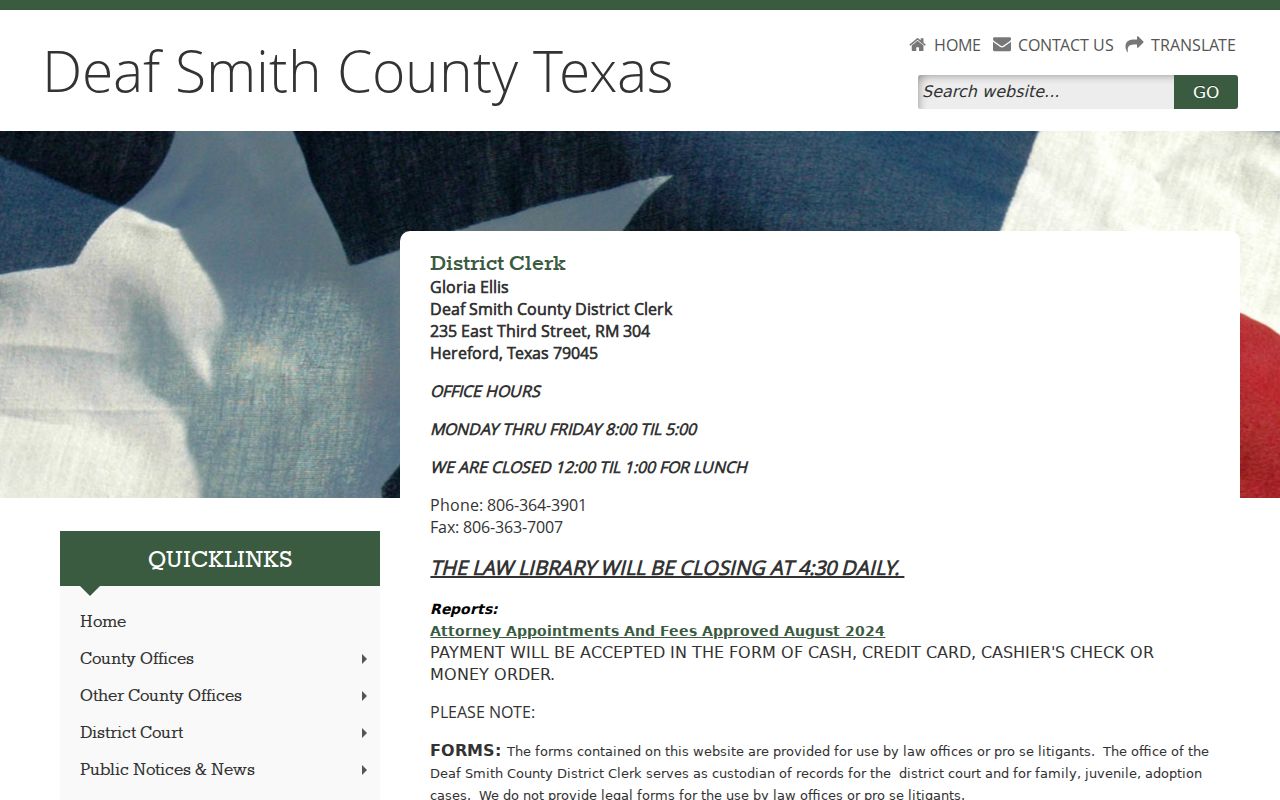
Deaf Smith County's District Clerk's office page lays out that office's record scope and public contacts.
How to Search for a Warrant in Deaf Smith County
Match your question to the right office. A Deaf Smith County warrant check works best along the likely case route, not through one counter. Keep the full name handy, plus any citation or cause number. If the matter might be a felony, a lawyer can help plan the next step before you appear.
- For a county traffic or Class C matter, review the JP-linked list and call the JP at the number on its official page.
- For a Hereford city citation, contact Municipal Court directly; it publishes a clerk phone and email, not a public warrant form.
- For a County Court file, ask the County Clerk which existing record is available.
- For district criminal process, contact the District Clerk or 222nd District Court.
- For service, custody, or Sheriff-held records, use the Sheriff’s published contact and ask whether the issuing court must confirm status.
- For a DPS renewal hold, identify the reporting court; the state compliance program is not a local warrant search.
A blank page is not the end. In Deaf Smith County, a missing entry may just mean another court holds the case or the list does not cover it.
Texas Has No Public All-County Search
Texas runs no single public portal covering every Deaf Smith County warrant across city, JP, county, district, and federal courts. TCIC and TLETS exist for authorized criminal-justice users only. The state's TCIC information describes that law-enforcement purpose, and the TLETS page covers the communications network. Neither is a public roster. DPS's FTA/FTP materials and OmniBase instead explain a license-renewal hold from a participating court, and DPS guidance points you to the court named in the notice. Ask that court about the citation and warrant status. A hold can hint at an issuing court, but it never proves a judge signed an arrest warrant.
Deaf Smith County Warrant Search Fields
The JP sheet is the only local source that exposes listing fields. A name can help you find a row, and the court can explain what the cause number refers to. Hereford Municipal Court posts contact and payment instructions but no public lookup fields for Deaf Smith County cases.
| Source | Fields or Controls Seen | Limit |
|---|---|---|
| JP Warrant List | Surname field, FIRST NAME, CAUSE#, CHARGE | No status, date, bond, warrant number, or completeness note |
| Hereford Municipal Court | Phone, email, hours, payment and ID guidance | No public warrant-search fields |
| Sheriff website | Agency and contact information | No public search form or roster |
| DPS / OmniBase | FTA/FTP and renewal-hold information | Not a local warrant database |
There is no date-of-birth box, status filter, or warrant-number field. The county's public sources simply do not show them.
Deaf Smith County Warrant Results Need Context
The word "warrant" can lead to very different records. The Deaf Smith County Clerk's material covers County Court records and posts no warrant-specific search, while the District Clerk handles district criminal, family, juvenile, adoption, and related files. The JP publishes a limited list. The Sheriff supplies law-enforcement contact information. So a name match means little until the right court and case confirm it. The official County Clerk source supports that office's public-record route, not a countywide warrant database.
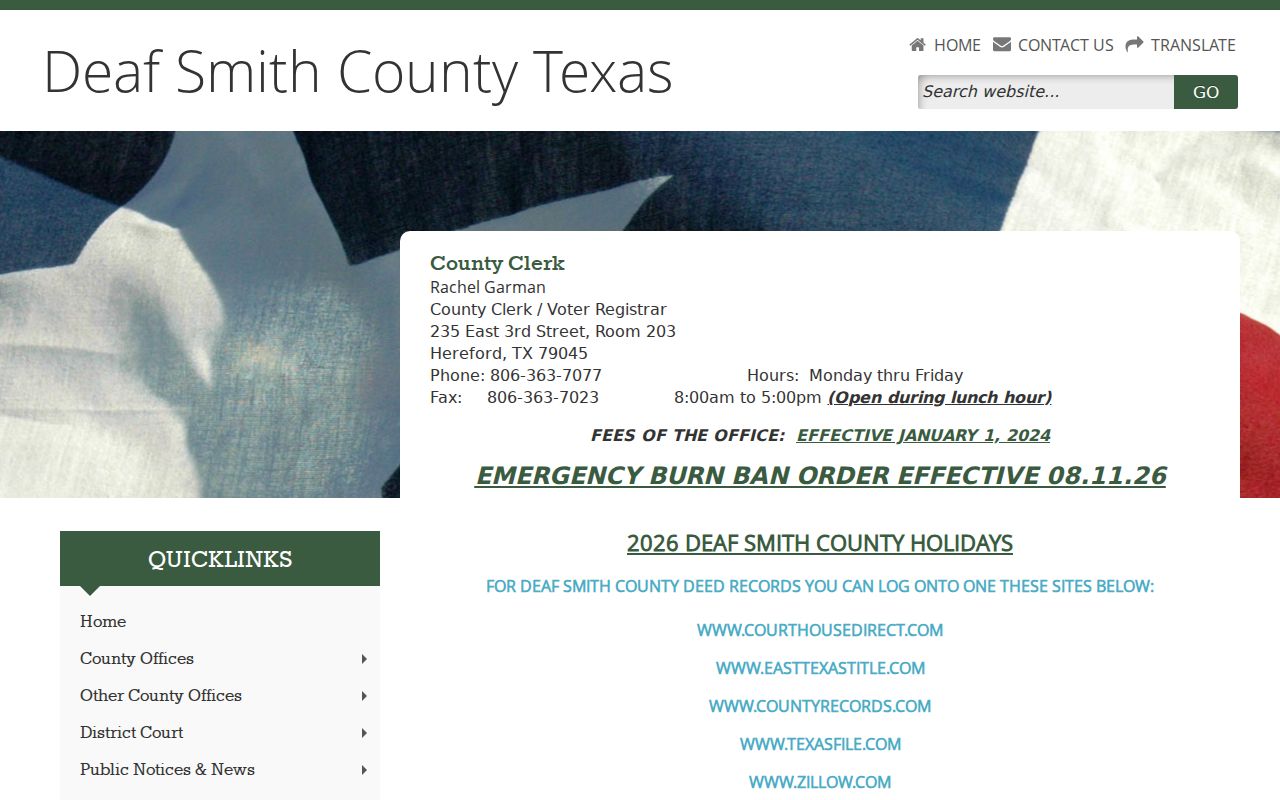
Check the County Clerk's page for its current office details. The Texas Judicial Branch also runs a live directory. Its directory landing page leads to court and personnel contacts, not a docket search.
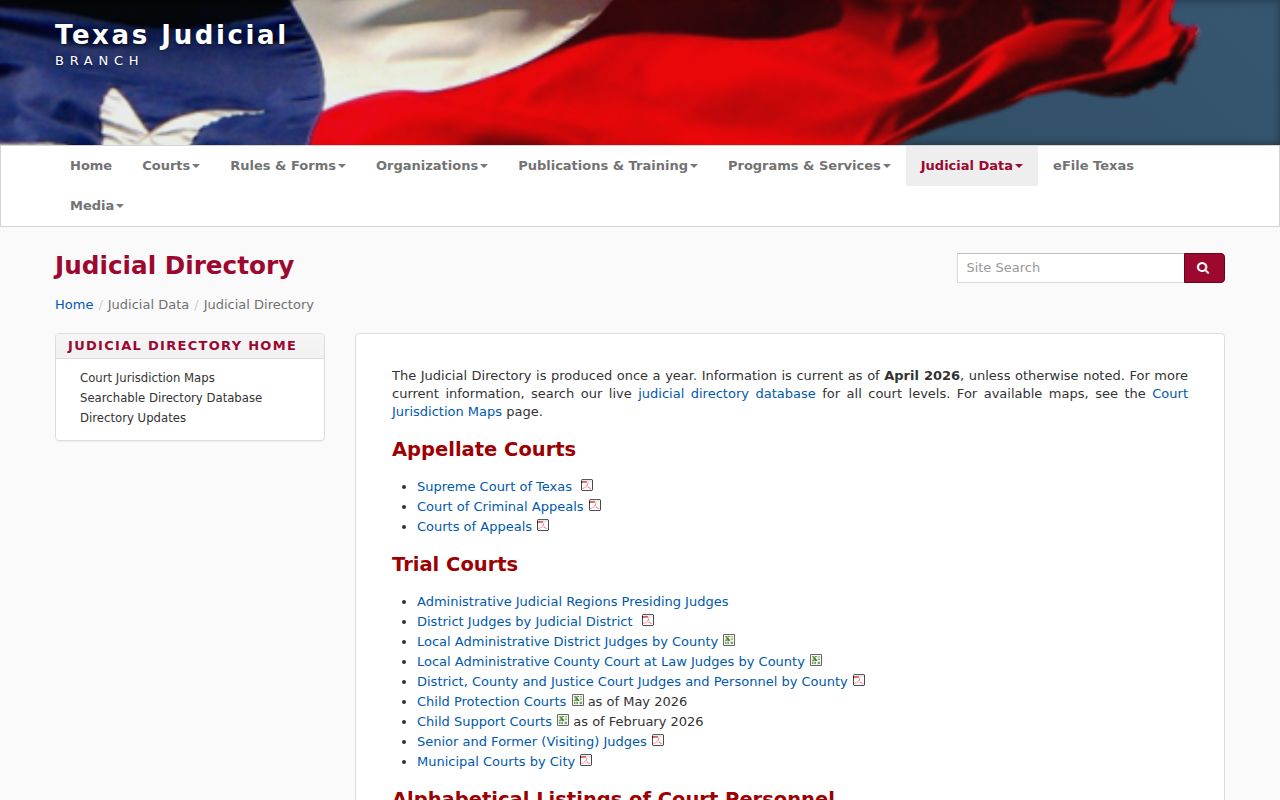
Use the live OCA directory to verify court contacts before making a call.
What a Deaf Smith County Warrant Search Returns
A result can be a row in the JP sheet, a clerk's case file, a court instruction page, or an agency record. Those are not the same thing. The public JP list gives limited identifying and charge fields, while a filed warrant may hold details the sheet leaves out. Ask the clerk what the Deaf Smith County record actually says and whether a separate warrant identifier exists.
| Cause number | The JP sheet uses CAUSE#; the observed format is YYYY-NNNNNN, sometimes with a “-V” ending. |
|---|---|
| Person and charge | A surname field, FIRST NAME, and CHARGE appear in the public JP sheet. |
| Warrant status | No active, served, or recalled field is visible. Ask the issuing court. |
| Date and bond | No issue date, update date, or bond amount appears in the public sheet. |
A result only shows what that one source contains. It cannot tell you whether the court still treats the warrant as active.
Precinct Service Is a Separate Route
The Precinct 1 Constable is another public office on the county map. Its page posts no warrant roster and no full service matrix. A constable may perform lawful service duties, but nothing says this office serves every Deaf Smith County warrant. Begin with the court that issued the paper and ask which agency handles service. The Constable's official contact page is a service-office route, not a searchable list.
Deaf Smith County's Precinct 1 Constable page lists a public phone contact.
Where Deaf Smith County Warrants Are Checked
Use the office that matches the case first, then add the serving agency only if needed. This short map of Deaf Smith County offices keeps separate records from blurring into one county system.
| Case lane | First office | What to confirm |
|---|---|---|
| County traffic or Class C | Justice of the Peace | Whether the matter is a citation, FTA, capias, or warrant |
| Hereford city citation | Municipal Court | Case status and court-approved next step |
| County Court record | County Clerk / County Court | Existing file and current court process |
| District felony | District Clerk / 222nd District Court | Filed record and any separate agency service question |
| Service or custody | Sheriff or assigned agency | Whether that office can confirm or route the question |
The Deaf Smith County active-warrant page explains why the JP list is not a complete roster. Read it before treating any list as final.
Written Requests Must Name Records
A written request works best when it stays narrow. Under the Texas Public Information Act, you can ask an executive agency for records it already holds, such as a Sheriff administrative procedure or any non-exempt document. Courts do not follow the ordinary PIA route; judicial records run on their own rules. So name the office, the record type, and the date range you want, and ask for segregable non-exempt material. No office in Deaf Smith County has to build a new database for you or certify that no warrant exists. The public-information request guidance from the Texas Attorney General walks through the written-request methods and shows what belongs in the model form's fields.
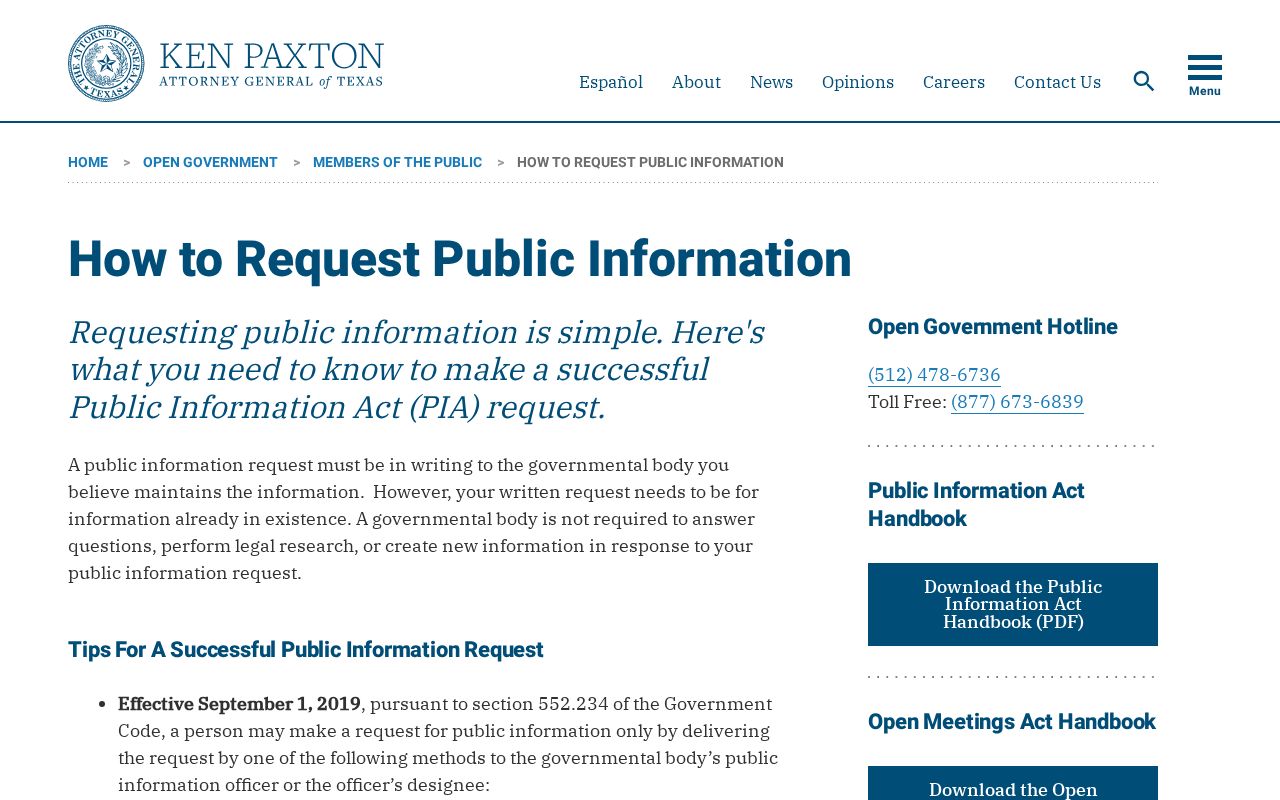
The OAG model request form is general guidance, not a Deaf Smith-specific submission portal.
Access and Restricted Warrants
Not every Deaf Smith County warrant record is open to the public. Texas law can make an executed arrest warrant and its affidavit public, but other statutes and timing rules still apply. Juvenile warrant and complaint papers sit under a stricter confidentiality rule. Active investigations, sealed filings, and protected identifiers may also be withheld or redacted. When a request stalls, ask a court clerk or a public-information officer which route fits the record you want. For a court file, start with the Texas Judicial Branch access policy. Sheriff-held administrative records fall under Chapter 552 instead, exceptions included. After an agency says no, the state Attorney General offers general PIA guidance, though that is not legal advice about a case.