
Deaf Smith County Bench-Warrant Routes
The right Deaf Smith County office depends on which court owns the file. A missed JP traffic date belongs to the Justice of the Peace, and a Hereford citation goes to Municipal Court. County-level matters run through County Court and the County Clerk, while felony files route through the 222nd District Court and the District Clerk. No common bench-warrant list exists. The current Texas court directory lists every court's official contacts.
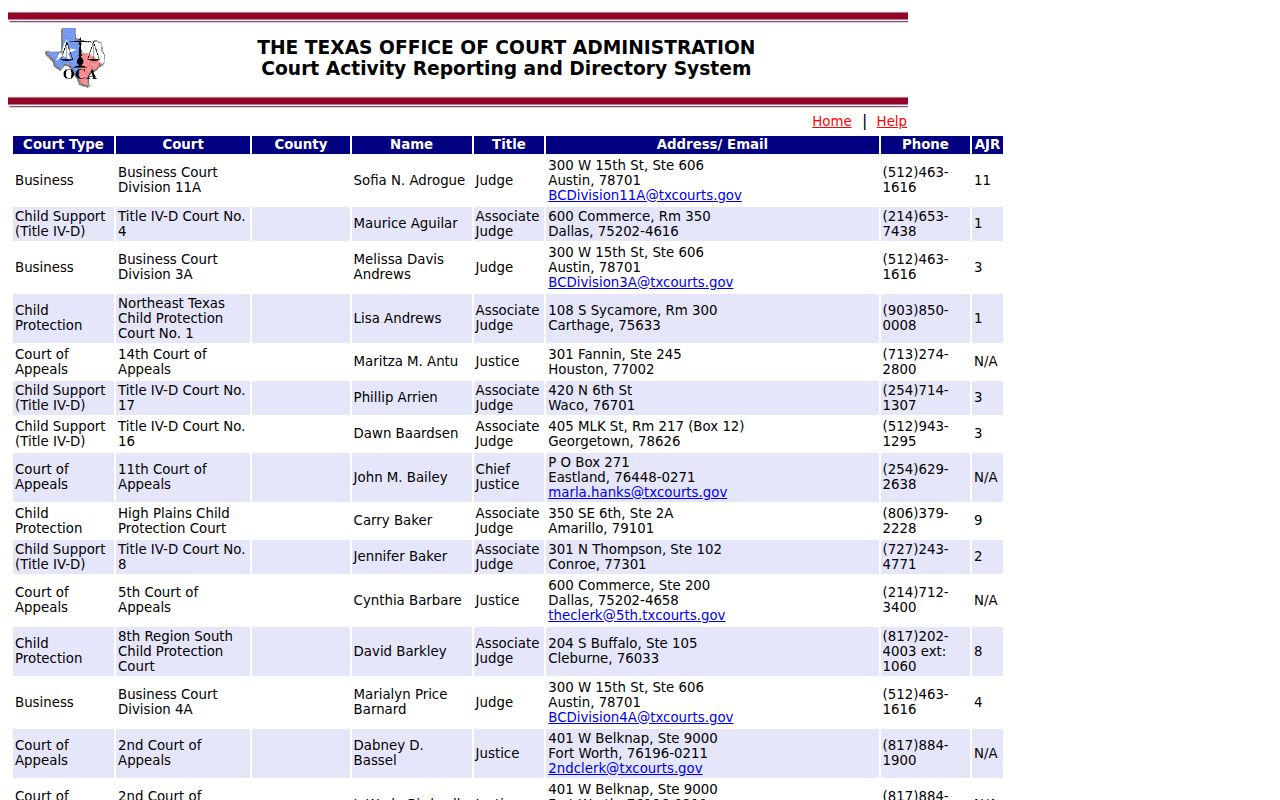
Confirm any office details in the live Texas Judicial Branch directory. It names Deaf Smith County courts and contacts, not a case's warrant status.
Bench Warrants in Deaf Smith County
People say bench warrant, but the label varies. In Deaf Smith County it usually means court process after a missed appearance or an unmet court requirement, and the local judge may instead issue a capias or an alias capias. An unpaid judgment can bring a capias pro fine. That document belongs to a covered justice or municipal matter, subject to statutory steps. Ask the clerk for the exact label. Get the cause number too. A record can show a failure to appear without any warrant ever being issued. Only the court can say which event occurred and whether the next setting, payment, or motion must happen in person.
Deaf Smith County Missed-Date Warrants
Missed a hearing in Deaf Smith County? Start with the notice or citation. Then call and ask what the judge recorded. The JP's public list can hint at a county traffic matter, but it shows no status field and no update date. Hereford Municipal Court gives its own warrant-contact instruction for cases out of that court.
- Identify whether the case is JP, municipal, County Court, or district court.
- Give the clerk the cause or citation number and missed-date information.
- Ask whether the court shows an FTA, warrant, capias, capias pro fine, or a new setting.
- Ask whether counsel, a motion, a personal appearance, payment, or another process is required.
- Keep the written order or receipt after the court acts.
The Deaf Smith County court's answer controls, and a payment confirmation alone may not show that a warrant was recalled.
How a Bench Warrant Is Issued
A judge or magistrate makes the call. What follows a missed court date depends on the case type, the notice given, the court's order, and the law that applies. In a justice or municipal fine case, Texas Chapter 45A sets the procedures for ability to pay, installments, community service, hardship, and capias pro fine. Not every missed date produces the same process. Deaf Smith County judges still choose among those tools file by file. The current Chapter 45A text supplies the statewide rule. It cannot tell you whether a particular local judge issued an order.
Deaf Smith County Capias Pro Fine
A capias pro fine follows judgment. It issues when a fine or cost sits unpaid in a covered justice or municipal case. It is not another name for an FTA, a traffic citation, or an ordinary arrest warrant. The label matters. The court must first apply the current ability-to-pay and undue-hardship rules that govern the case. Deaf Smith County courts follow that same framework. The Texas Code of Criminal Procedure Chapter 45A describes these procedures. The law sets the frame, but the issuing court decides what a specific file allows.
Read Chapter 45A alongside the Deaf Smith County court's instructions before treating any unpaid fine as an automatic arrest outcome.
- FTA
- A failure to appear or respond; it may be distinct from a warrant.
- Capias
- A writ directing custody and return to court.
- Recall
- A court action that withdraws or ends process; ask for confirmation.
- Hardship hearing
- A court procedure that may address ability to pay in covered cases.
Bench Warrant vs Arrest Warrant
The reason for the process helps you locate the record. A bench warrant usually follows a missed court obligation in Deaf Smith County, while an arrest warrant follows a magistrate's review of an alleged offense. A capias pro fine comes after judgment in a covered fine case. The document's real name and issuing court count most.
| Term | Common trigger | Deaf Smith route |
|---|---|---|
| Bench warrant | Missed appearance or court requirement | Court that set the date |
| Arrest warrant | Magistrate-authorized arrest process | Issuing court; agency for service questions |
| Capias pro fine | Unpaid covered fine/cost judgment | JP or Municipal Court |
| FTA/FTP report | Participating-court compliance report | Issuing court and DPS, not a warrant roster |
Deaf Smith County Fine-Warrant Options
For a justice- or municipal-court fine, ask the court about an installment plan, community service, a waiver or reduction, or a hardship hearing under Chapter 45A. What a person owes is set case by case. A budget line or an old fee schedule cannot fix the current amount for anyone. Deaf Smith County's published Sheriff fee PDF dates to 2017. The current city court page lists payment methods but no universal warrant-clearing total. Ask before paying. The Texas Public Information Act covers administrative records. Court files follow judicial-record rules instead. The Texas courts access policy draws that boundary for court records.
The Texas courts access policy explains that boundary for court records.
How to Resolve a Deaf Smith County Bench Warrant
Call the issuing clerk and ask what the court allows. The record might point to an attorney, a reset, a motion to recall or quash, a voluntary appearance, a bond, an installment plan, community service, or a hardship hearing. Which one fits is your call. The Deaf Smith County clerk can explain procedure but cannot advise which choice is best for you.
Call before arriving: Local pages do not promise a universal walk-in surrender, after-hours intake, or same-day recall. Confirm the court’s instructions and any Sheriff route first.
Sent to law enforcement instead? Ask the Sheriff where to appear, what identification to bring, and how custody works in Deaf Smith County. Keep any written order, and ask whether a separate license-hold clearance must be sent.
Deaf Smith County Juvenile Warrants
Juvenile cases in Deaf Smith County do not sit in an ordinary public warrant search. The court routes juvenile records through a separate, confidential track. Texas Family Code §58.010 sets those confidentiality limits. So skip the public JP spreadsheet for a child's case. A blank result there is not a green light to pry into protected details elsewhere. For a question you are authorized to ask, the court or a lawyer can explain the lawful access path, and the statute's juvenile-record chapter shows the rules that govern it.
Family Code Chapter 58 identifies protected juvenile material and permitted access.
Which Deaf Smith County Court Issued It
Match the warrant to its issuing court. Start with the case type and court named on the citation, notice, or prior order. In Deaf Smith County, the county JP handles county traffic and Class C matters, while Hereford Municipal Court takes city ordinance and Class C cases. County Court and the 222nd District Court each keep their own clerks. The Sheriff may serve a warrant, but the issuing court's record still controls.
| Likely matter | First court contact |
|---|---|
| County traffic / Class C | Justice of the Peace, Room 100, (806) 364-0999 |
| Hereford city citation | Municipal Court, (806) 363-7127 |
| County Court matter | County Clerk, (806) 363-7077 |
| District felony matter | District Clerk, (806) 364-3901 |
Need the wider route map? Return to the Deaf Smith County warrant records overview for current source links.